Cart
0
You may also like


A biodegradable cleaning product contains ingredients that microbes can break down, mainly into carbon dioxide and water. The word describes the ingredients, not a tested finished product, and it says nothing on its own about whether the product is gentle on skin, lungs or waterways. This guide explains what the term means in the UK, how to read a label with confidence, which products suit which jobs, and how to use and store them safely.
In the cleaning industry, biodegradability is a property of an organic ingredient: microbes can digest it and turn it mainly into carbon dioxide and water. UKCPI, the UK trade body for cleaning and personal care products, explains that testing a complete product for biodegradability is not meaningful, so the claim only makes sense at ingredient level.
The legal definition is more precise. The detergents legislation describes ultimate aerobic biodegradation as microbial mineralisation to carbon dioxide, water, mineral salts and new biomass. That is the standard behind the wording you see on bottles.
Not every biodegradable ingredient breaks down at the same speed. The UKCPI and Defra Green Claims Guidance says a biodegradability claim should normally mean “readily biodegradable”, the faster and more demanding standard. Ingredients that are only inherently biodegradable break down more slowly and should be described as such rather than treated as the same thing.
In practice, when a brand says an ingredient is readily biodegradable, that is a stronger statement than a bare “biodegradable” on the front of the pack.
Most of it happens after the product has gone down the drain. UKCPI notes that surfactants, the cleaning agents in detergents, must be rapidly and completely biodegradable by law, and that the process commonly takes place through microbes in sewage works or septic tanks. If you have a septic tank, that is one more reason to read ingredient lists with care.

Biodegradability is one test among several. UKCPI points out that an ingredient also has to be removed during sewage treatment, by biodegradation or other processes, to levels that do not harm the environment. The same source warns that “natural” or plant-based wording does not by itself establish safety: ingredients still need a risk assessment and effective removal.
The Green Claims Guidance goes further for shoppers. It says that because the law already sets biodegradability requirements for surfactants, a brand whose surfactants merely meet those requirements should not make a biodegradability claim. It also says vague claims such as “biodegradable” on a cleaning product are unacceptable, and that claims belong only where a product is meaningfully different from others on the market. Claims should not suggest that ready biodegradability alone guarantees environmental safety.
What does this mean for you? Treat “biodegradable” as a starting point and look for the details behind it: which ingredients, what they are made from, and what the brand leaves out.
UK law gives you more information than most people use. Under the Great Britain detergents framework described by the HSE, detergents include household mixtures meant for all-purpose and other surface cleaning. Labels must give ingredient categories in percentage ranges, and individual constituents are listed once they exceed 0.2%.
Here is a quick routine for the shop shelf or the product page:
Which? also suggests being sceptical of unsupported green claims rather than relying on environmental wording alone. In its cleaning-spray testing, it reviews biodegradability, aquatic harm, persistence, ingredient transparency and packaging recyclability alongside how well each spray removes bathroom grime and limescale. That is a sensible checklist to borrow.
They can. Which? reports that eco detergents can match the best products for cleaning power, though products without optical whiteners may score lower on tests that focus on whiteness. That is a cosmetic difference in a laundry test, not a sign that the product is not cleaning.
Independent testing elsewhere points the same way. An Australian CHOICE bathroom-cleaner test found that several eco products performed well and some beat traditional ones. Its method used tiles coated with soap scum, the recommended contact time and a controlled 10-cycle scrub. The lesson applies at home: how you use a product matters as much as what is in it.
The Cleaning and Hygiene Suppliers Association (CHSA) says meaningful cleaning generally needs chemical and mechanical action together, not brushing or agitation alone. In everyday terms:
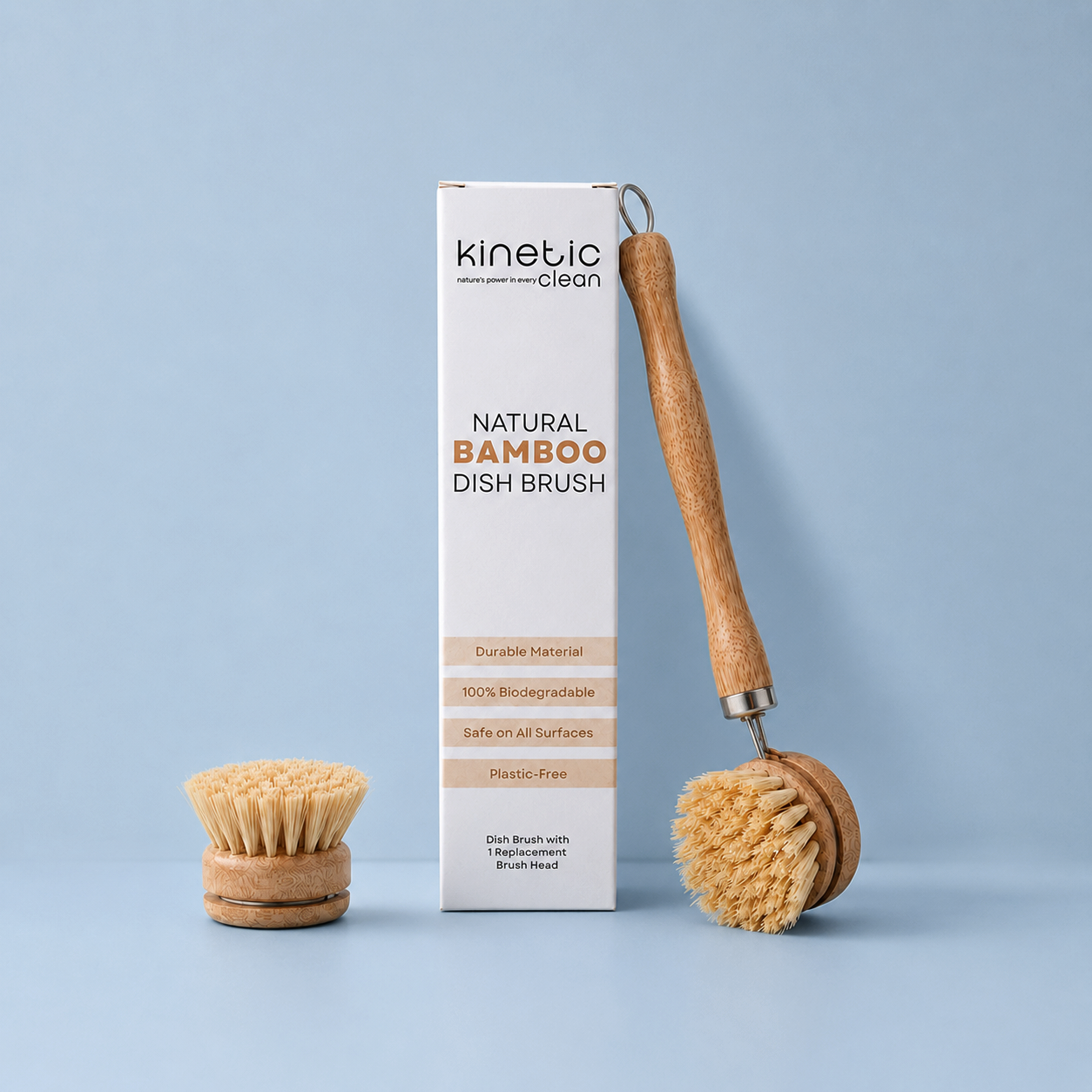
A good brush helps with the mechanical half. Our Bamboo Dish Brush is available from £2.99 and suits washing-up and scrubbing small items.
No single bottle is right for every surface, but a small set covers most of a home. Use this as a guide, and always read the label for the surface in question.
| Task | What to look for | Practical tip |
|---|---|---|
| Kitchen worktops and hobs | A multi-purpose cleaner suitable for food-contact areas, with a clear ingredients list | Wipe, leave for the stated contact time, then rinse with a clean damp cloth |
| Bathroom tiles and taps | A cleaner that deals with soap scum and limescale | Allow contact time before scrubbing, and ventilate the room |
| Glass and mirrors | A diluted cleaner in a spray bottle | Use a clean, dry microfibre cloth to avoid streaks |
| Washing-up | A gentle washing-up liquid and a durable brush | Choose a brush with a plant-based handle that can be replaced |
| Hands, handles and switches | A sanitiser suited to the job | Follow the pack instructions on how to apply it |
| Floors | A product suited to the floor type | Check the manufacturer’s care guidance for wood and stone |
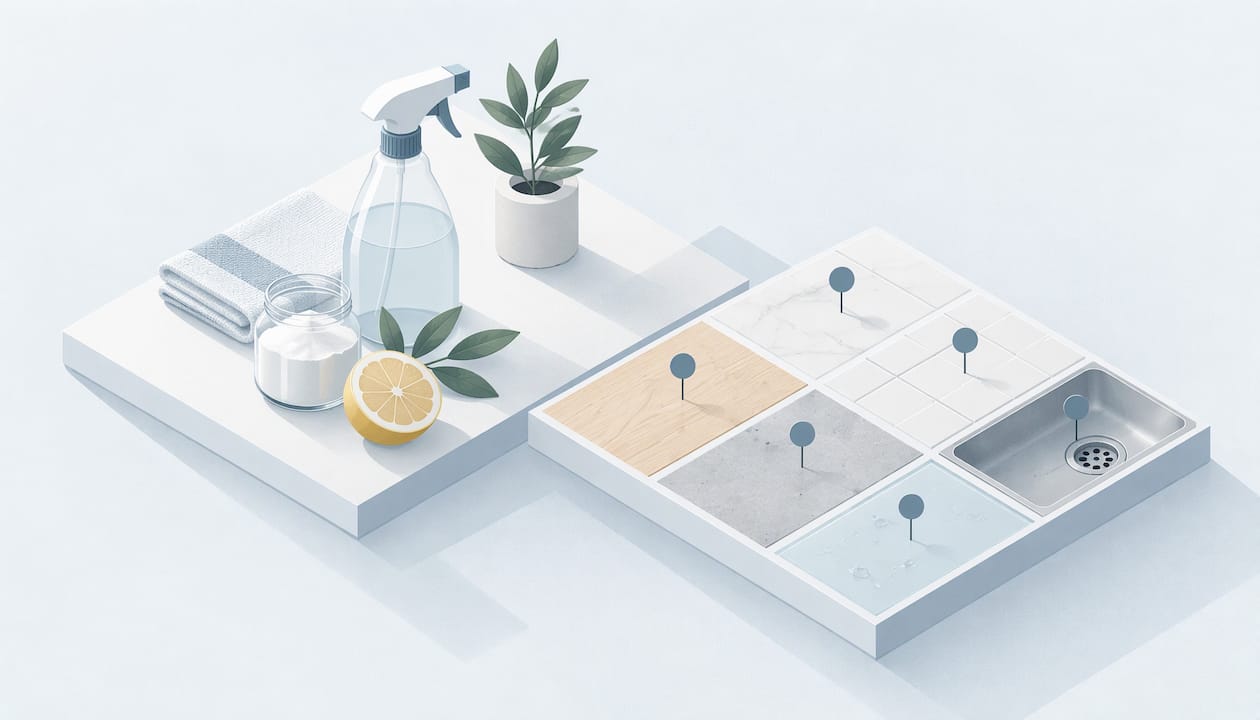
Before using any new cleaner on natural stone, unsealed wood, painted walls or delicate fabric, try it on a small hidden area. This protects the surface whatever the product, and it is the quickest way to learn how a surface reacts.
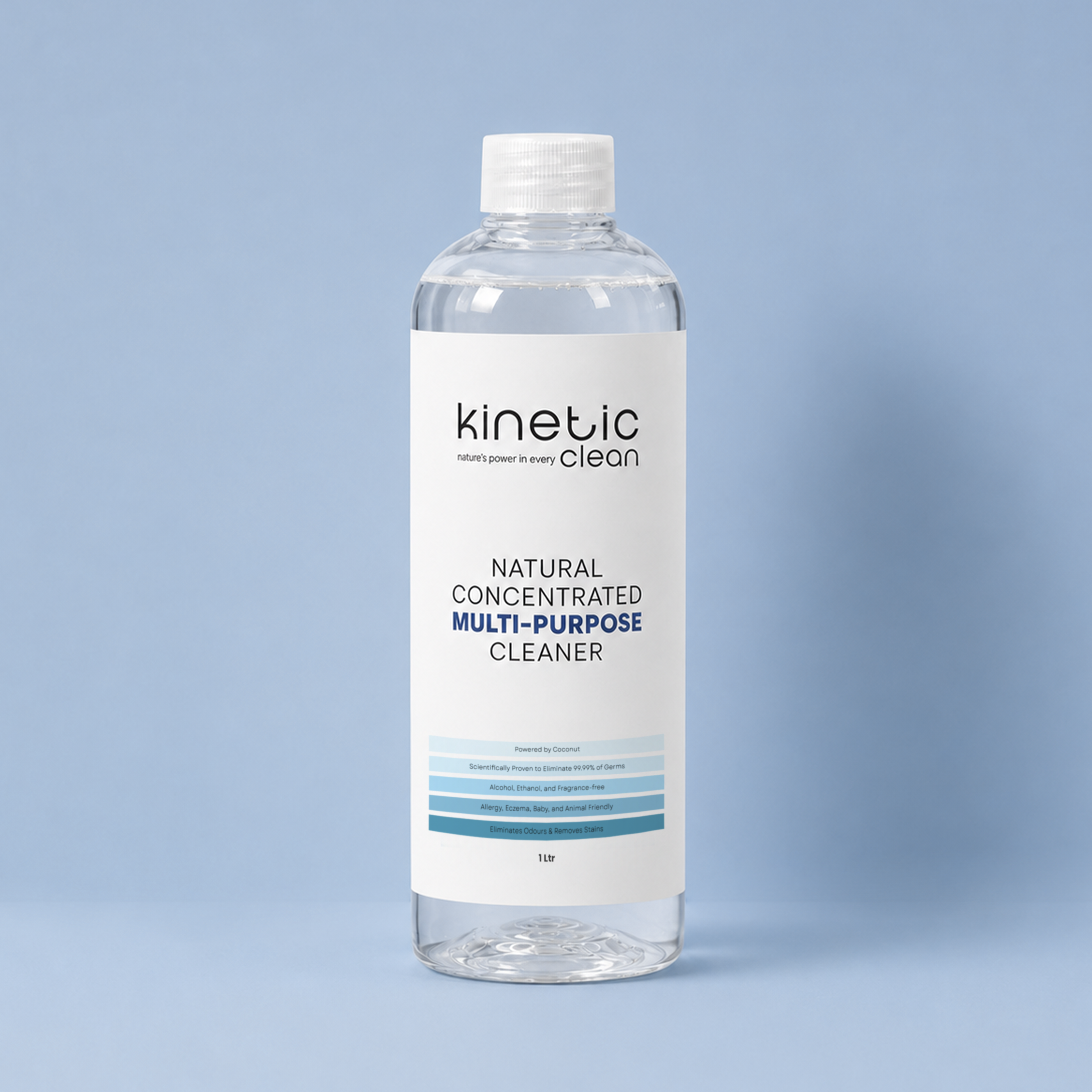
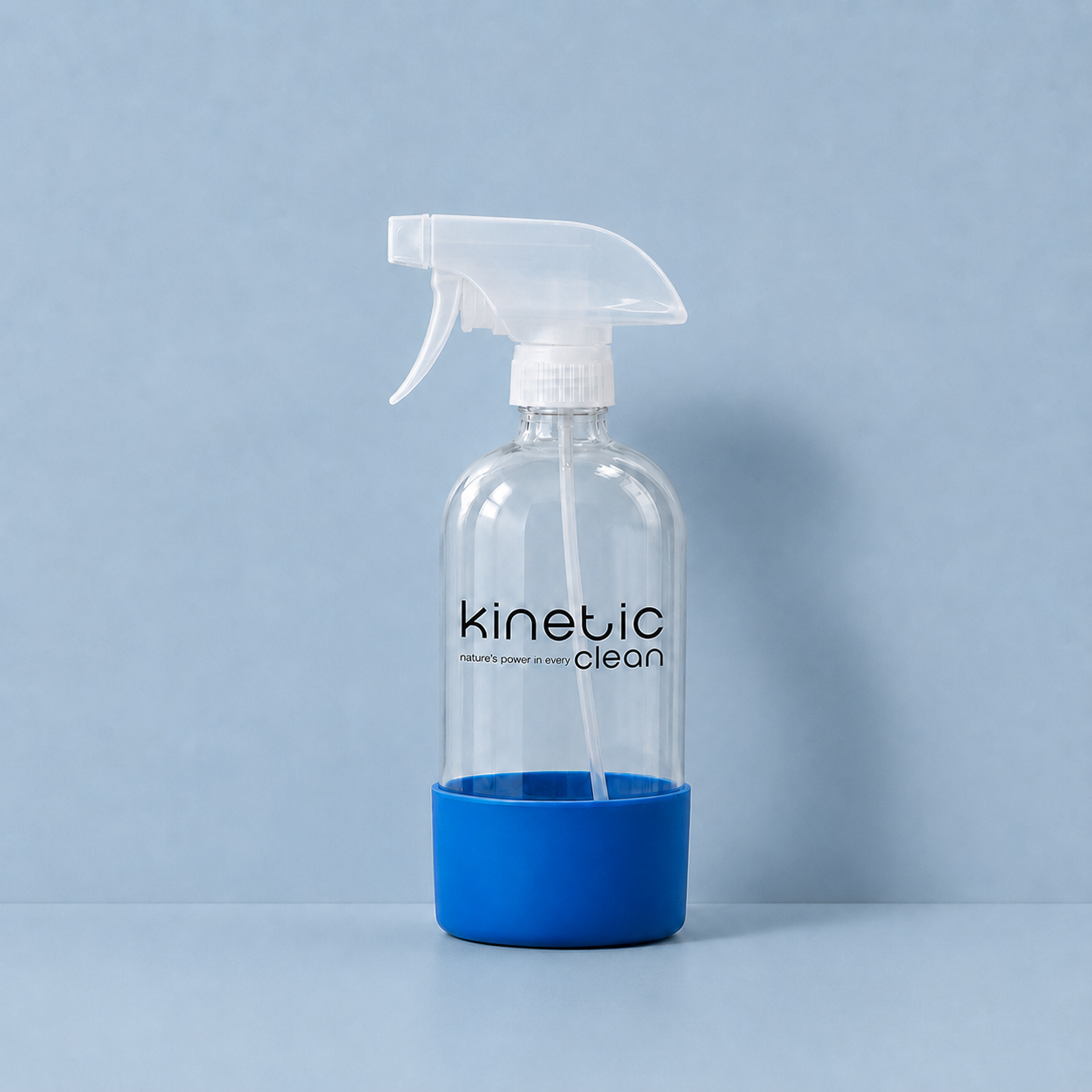
Concentrated formulas that you dilute at home suit a household that wants one product for many jobs. They also mean fewer bottles to store and carry. Our 1L Concentrate Formula is designed as a multi-purpose concentrate, and the Glass Spray Bottle 500ml gives you a reusable bottle to dilute it in. Always follow the dilution guidance on the pack.

Not automatically, and the reason is simple: biodegradability describes what happens to an ingredient after use, while safety for your family depends on what the ingredient does to skin, eyes and lungs on the day you use it. UKCPI’s point that natural wording does not establish safety is relevant here.
For households with sensitive skin, asthma or young children, a few habits help:
If you want a wider view of what non-toxic means in a home setting, our article on non-toxic cleaning products for a healthier home goes through it.
The safety advice from UK bodies is consistent, and it applies to every cleaning product, gentle or not.
Dispose of unused product and empty packaging safely. For unwanted chemicals, the London Fire Brigade advises contacting your local council, since collection arrangements differ by area. Check your council’s website for how to recycle the bottle type you use.
We started Kinetic Clean from a simple idea: if we would not put harsh chemicals on our skin, we should not use them to clean the places where we live, eat and sleep. Our founder Catherine has built a family of brands around natural, non-toxic living, from gut-nourishing foods to tallow-based skincare, and cleaning is the next step in the same journey.
When people ask us about biodegradable cleaning products, we hear a deeper question underneath: is this safe for my family? That is why we encourage looking beyond a single word on the front of a bottle and reading the ingredients. Our products are designed to be free from synthetic chemicals, artificial fragrances and alcohols, which many conventional cleaners rely on and which can irritate skin and lungs.
We believe a gentler alternative should still be simple to use. A concentrate you dilute at home, a sanitiser for the moments that need one and a few well-chosen tools can cover most of a household’s cleaning without a cupboard full of different bottles.
TekHive
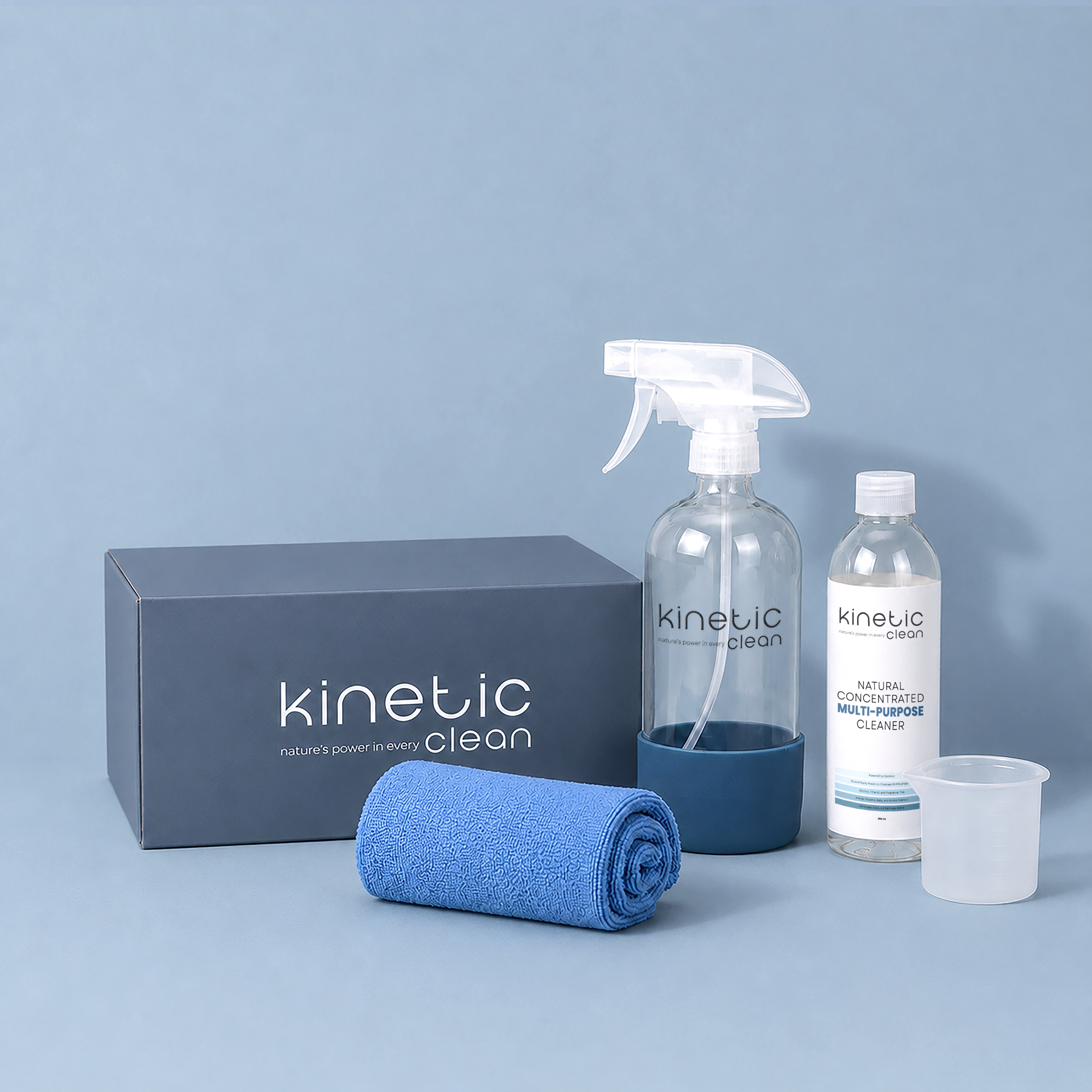
If you are new to switching, you do not need a long shopping list. A practical starting kit has four parts:
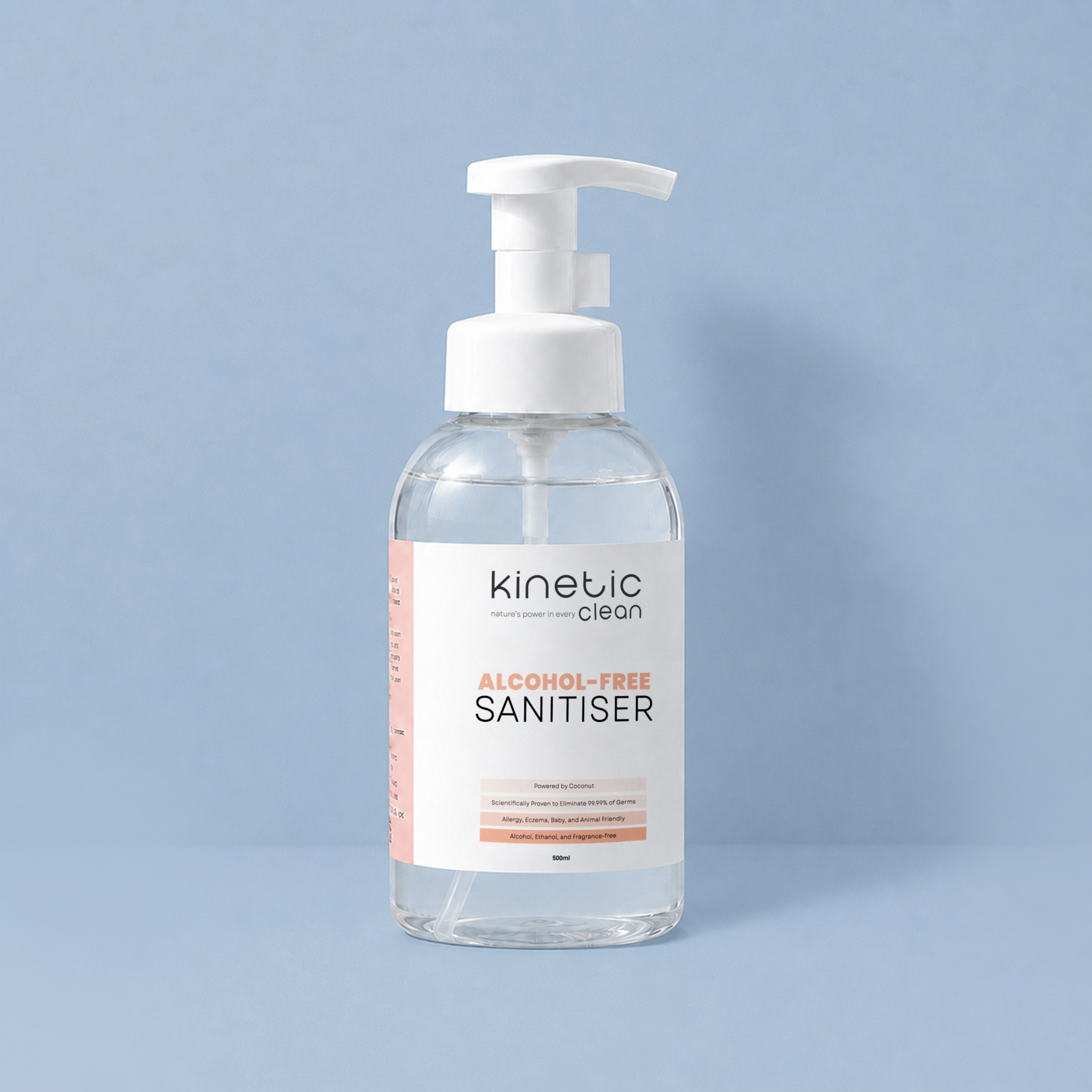
Our Starter Bundle brings together a starting set so you can try a gentler routine in your own home. If you only need part of the kit, the Sanitiser is available on its own.
If you want cleaning products made without synthetic chemicals, artificial fragrances or alcohols, start with our 1L Concentrate Formula or the Starter Bundle. Both are made for families and for anyone who prefers a gentler approach at home.

You can browse the full range on our shop, including the Bamboo Dish Brush from £2.99.
No. Biodegradable describes how an ingredient breaks down after use, not how it affects people on contact. UKCPI notes that natural or plant-based wording does not by itself establish safety. Keep every cleaner out of reach of children and pets, in its original container.
The surfactants in UK cleaning products must be rapidly and completely biodegradable by law, according to UKCPI. That covers the cleaning agents, not every ingredient in a formula. This is why the full ingredients list matters.
Independent testing suggests they can. Which? reports that eco detergents can match the best products for cleaning power. Contact time and some scrubbing also make a real difference to results.
No. RoSPA advises never mixing products, because this can release dangerous gases. Use one product at a time, rinse the surface and allow time before using another.
Do not pour unwanted chemicals away without checking. The London Fire Brigade advises contacting your local council for disposal advice, as arrangements vary between areas.